Your next car starts with a better comparison

Compare new and used cars, understand car financing, and plan maintenance and charging for everyday driving in the United States, Canada, Australia, the United Kingdom, New Zealand, Ireland and South Africa.

ABOUT WEQ VIRAL

Guides for buying and owning your next car

AI-generated editorial illustration: Adult beside a parked charcoal crossover checking a notebook before a longer trip.

Translate driving distance into GFV return questions

A GFV return plan can depend on kilometres as well as condition and maintenance. Compare the agreement’s allowance with realistic driving before assuming the final option will suit you. Keep an ordinary balloon debt separate: the existence of a final balance does not establish a mileage-based return right.


Bruno Cardoso ·
AI-generated editorial illustration: South African parent checking child-seat fit in the rear seat of a parked practical crossover.

Try family-car space and routine before choosing the budget

Space, access and cost meet in an ordinary family routine. Try passengers and luggage together, then compare the monthly car costs on that same week. An advertised seat count or a photograph cannot establish child-restraint compatibility, condition or comfort.

Bruno Cardoso ·
AI-generated editorial illustration: Adult checking the empty load bed of a white double-cab bakkie at a South African small-business driveway.

Match bakkie use, load questions and cover to your ordinary week

A bakkie can answer load, access and work needs, but its body style alone does not prove suitability. List the ordinary job and passengers before looking at instalments. Keep payload, towing and insurance-use questions tied to the actual vehicle and policy rather than a generic picture.

Bruno Cardoso ·
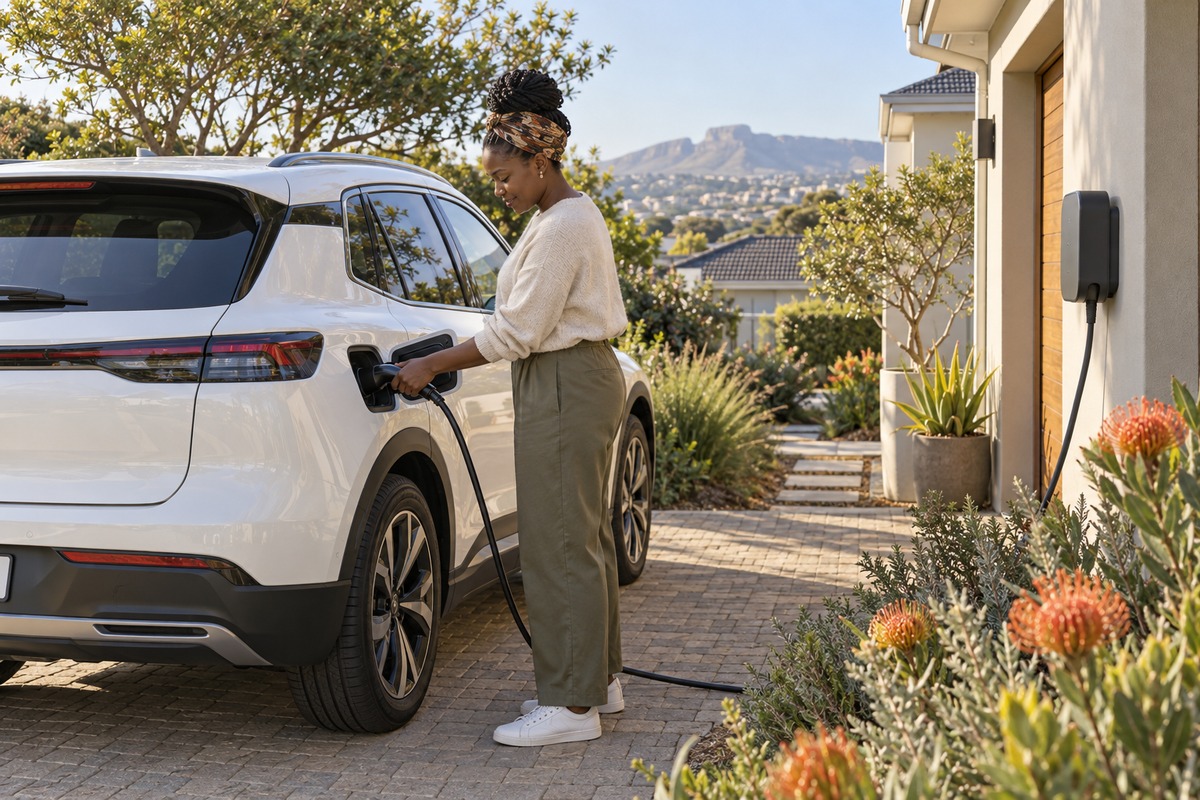
AI-generated editorial illustration: a woman connecting an electric car to a home charger in a South African setting.

Compare South African EV energy with practical charging access

An EV energy estimate is useful only alongside the places and times you can actually charge. Check home access and the public points on your real route. Then compare energy on matched kilometres, with tariffs you supplied, while keeping installation, session charges and running costs separate.

Bruno Cardoso ·