
CANADA · ENGLISH GUIDE · VALUES IN CAD
Plan an EV around charging access, the actual route and energy-cost assumptions appropriate to the candidate vehicle. Use a separate cold-weather scenario and keep its limits visible. Charging cost does not replace route planning or the complete ownership budget.
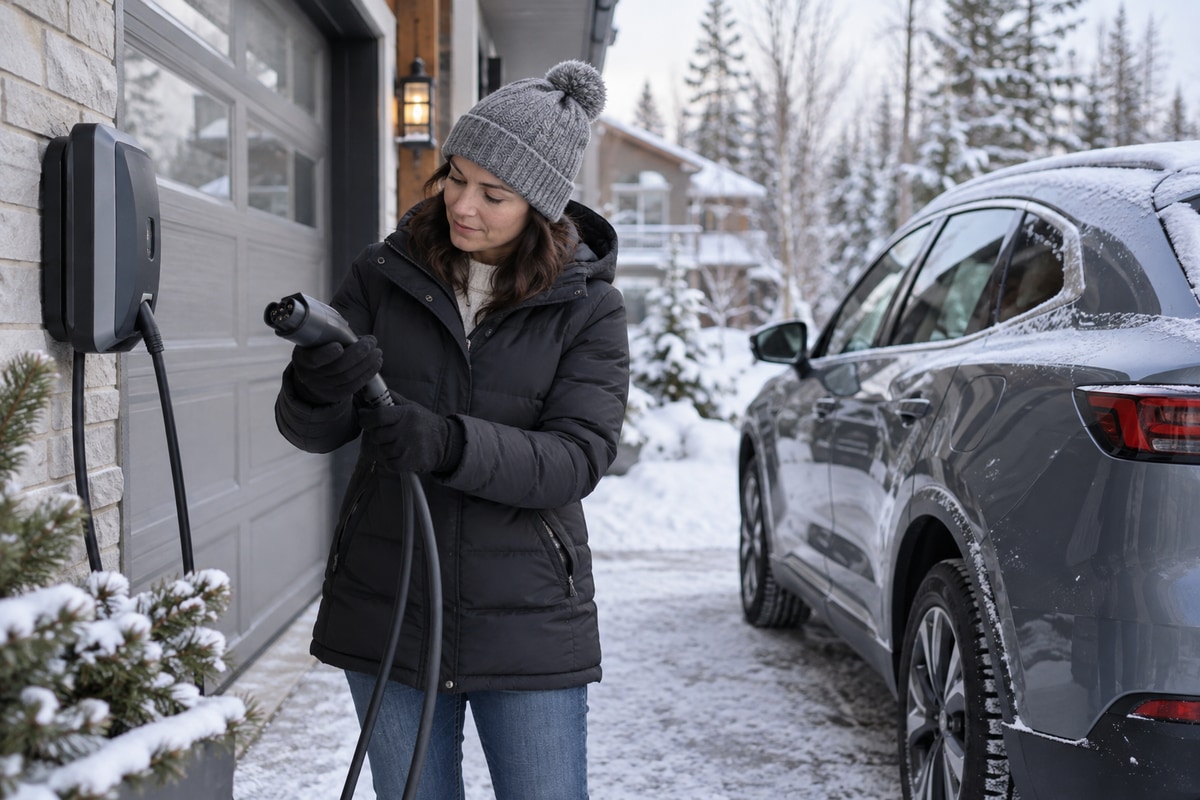
Confirm where charging is actually available
List the places you expect to charge and confirm access, permissions and compatibility. For home or building installation, consult the applicable qualified installer and property process. Do not treat an ordinary power source or an advertised charger as confirmation that an installation is suitable.
Natural Resources Canada's charging guidance is a starting reference for charging arrangements and equipment. The practical plan still needs current information for the actual vehicle, location and route.
Separate prices and other charging expenses
Record home and public energy prices from the sources you expect to use. Estimate what share of energy comes from each location. Keep session, time, parking or other applicable charges separately identified rather than hiding them inside an unexplained electricity average.
The worksheet calculates only the entered energy quantity and blended per-kWh price. Installation, losses, taxes and other charges are outside that model. If those costs apply, add them explicitly to the purchase-cash or recurring budget.
For an illustrative 1,600 km month, the buyer chooses 18 kWh/100 km in one scenario and 24 in a winter scenario. With 80% of energy at CAD 0.14/kWh and 20% at CAD 0.45/kWh, modeled energy costs are about CAD 58.18 and CAD 77.57. The figures exclude installation, charging losses, session charges, parking, taxes and other ownership costs.
How to read it: The winter consumption is a chosen input, not a prediction about every Canadian EV. Actual vehicle, weather, charging and route information are needed for practical planning.
WEQVIRAL · CANADA · DECISION FRAME
Charging cost depends on the stated mix
Energy used
Use distance and your chosen consumption scenario.
Charging mix
Weight home and public energy prices by the home share.
Costs outside energy
Keep installation, parking and session fees separately identified.
Energy cost = kilometres ÷ 100 × kWh/100 km × blended CAD/kWh.
Plan cold-weather use with vehicle-specific information
Transport Canada's winter-trip guidance notes that cold temperatures can reduce EV range. That general caution does not supply a universal reduction or charging time. Check the candidate vehicle's current information and the route you actually need to travel.
Canadian reference: Transport Canada — Planning your winter trip. Check the current lender, insurer or provincial authority for conditions applying to your situation.
Keep an ordinary and winter consumption scenario in the worksheet, identifying why you selected each input. The resulting cost difference is conditional on those choices. It does not predict state of charge, confirm a particular trip or guarantee that a public charger will be available.
Bring insurance and other ownership costs back into view
Obtain an insurance quote for the actual vehicle and intended use. Add financing, parking and applicable upkeep to the budget. The recurring loan payment and a low energy estimate may still leave a large part of the ownership month unexplained.
Keep incentives outside the basic calculation until you check the current program, vehicle and transaction conditions. A program can change, and eligibility is not established by a generic EV image or a calculator result. This guide does not include an assumed rebate.
Use the worksheet to test a stated scenario
Enter kilometres, consumption, charging share and actual price assumptions. Change one input at a time to understand its effect, then compare another complete routine if needed. Label the difference between a cost scenario and a practical charging plan.
Revisit the budget if most charging must move from home to public use, the route changes or your vehicle choice changes. The worksheet supports that conversation; route planning and actual equipment arrangements still require their own current information.
Put the next decision into a worksheet
Use the EV worksheet to compare two chosen consumption scenarios and a home/public charging mix. Read the omitted costs beside the result. Then use the insurance guide and complete budget for the remaining ownership lines.
The related decision
Choose charging to examine access and energy-cost scenarios. Choose insurance when you need the actual premium and coverage questions before completing the ownership budget. Keep route feasibility, energy cost and the total car month as separate connected views.