
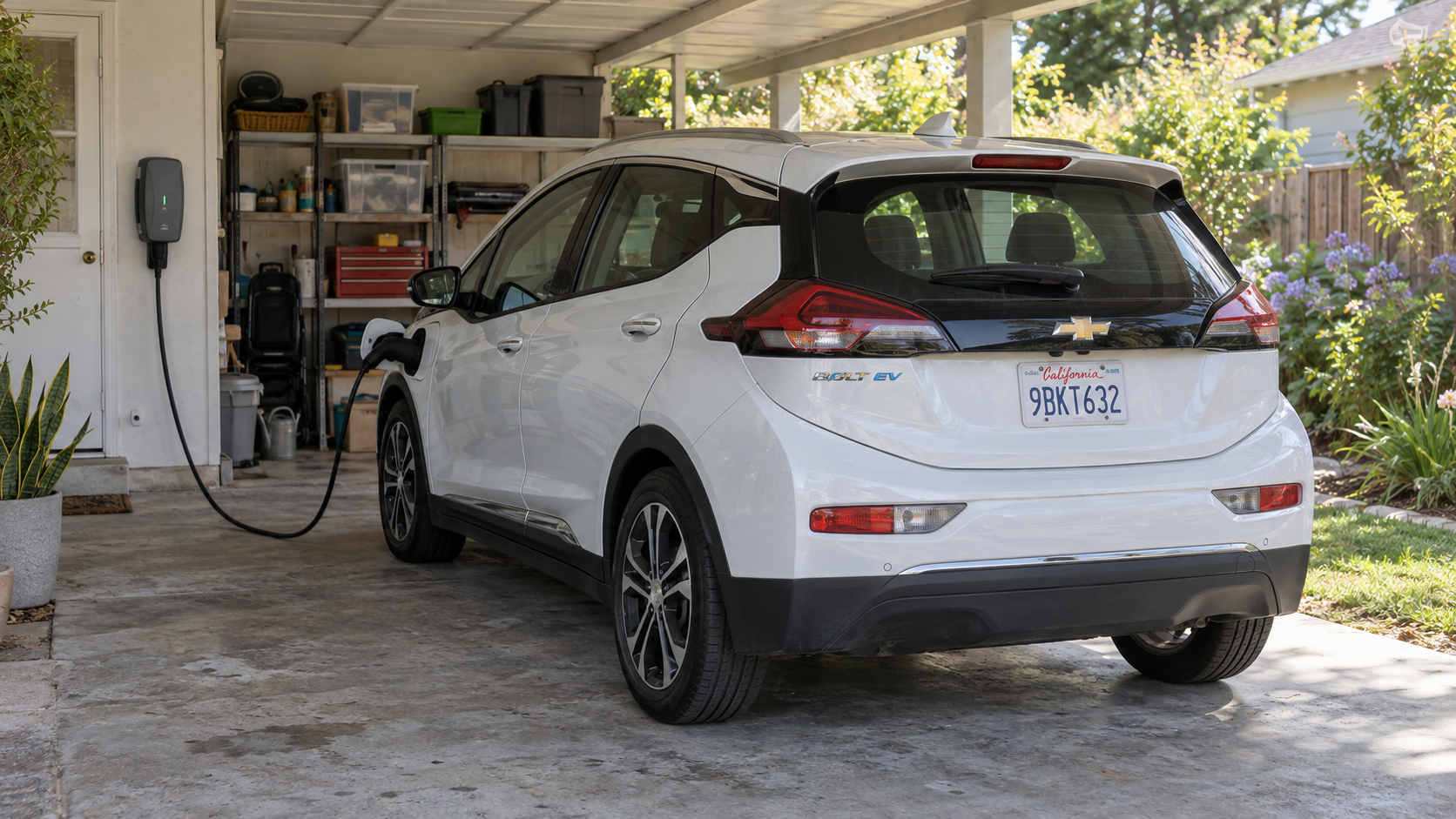
Before buying an electric car or plug-in hybrid, decide where you will charge and how that fits your routine. Vehicle price and advertised range are only part of the choice. Start with your parking access, daily distance and the trips that take you beyond your usual route.
Check the parking and electrical setup
The Alternative Fuels Data Center explains home charging with Level 1 and Level 2 equipment. It recommends safety-certified equipment and a qualified electrical contractor, who can assess whether the home has adequate electrical capacity. Installation requirements and costs depend on the property.
If you rent or share parking, confirm that you can install or use equipment before budgeting around home charging. Keep installation permission, installation cost and ongoing electricity cost as separate questions. Access to a space does not automatically mean access to a suitable charging setup.
Calculate a transparent charging scenario
Use your own assumptions instead of copying another driver’s bill. For example, 30 kWh of assumed electricity at $0.20 per kWh costs $6. This is an arithmetic example, not a full charge cost, a utility tariff or a vehicle efficiency claim. Actual billing and energy used can differ.
Write down what the electricity price includes and where charging occurs. Public charging can use different pricing from your home account. Add any known fees from the provider rather than assuming one rate applies everywhere.
Test your daily route and occasional trips
Describe a normal week: where the car parks, when charging is available and how far you drive. Then add an occasional longer journey and examine charging locations on that route. Check the vehicle’s connector compatibility and manufacturer guidance for the exact version you are considering.
A plug-in hybrid also needs a plan for fuel use. Compare your actual opportunity to charge rather than assuming every mile will be electric. A conventional hybrid has a different charging arrangement, so confirm the drivetrain instead of treating every hybrid as a plug-in.
Put the complete ownership plan together
Combine the transaction price or loan terms, insurance, charging setup, energy and maintenance needs. A cheaper energy scenario does not automatically make a more expensive purchase cheaper overall. Repeat the comparison when a major assumption changes.
Before choosing, confirm the car’s specifications and get written installation or charging costs where relevant. Weq viral publishes editorial guidance, not installation advice, a vehicle certification or a financing offer.