
The relevant tire-pressure guidance comes from the vehicle manufacturer for the configuration and conditions. Build a routine around that information instead of copying a number from another driver's car.
Find the vehicle guidance
Consult the tire and loading information label and owner's manual for the applicable pressure and checking instructions.
Do not use the tire's maximum sidewall pressure as an automatic everyday target. If a label is unreadable or modifications raise questions, ask the manufacturer or a qualified tire professional to clarify the specification.
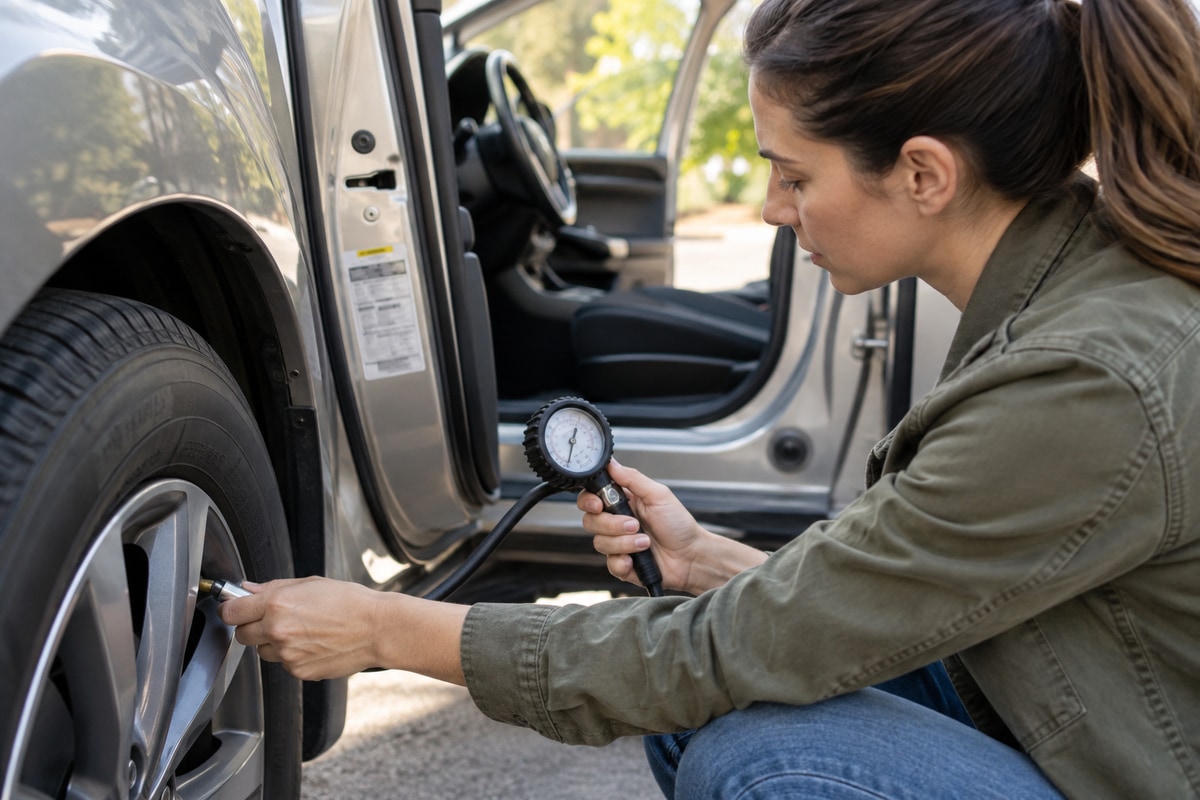
Use an appropriate gauge and follow the checking conditions in the vehicle guidance. NHTSA's tire information explains cold-pressure checks.
Recording date and conditions helps distinguish a repeat observation from readings taken under different circumstances. A tire that looks normal is not a substitute for checking with the appropriate tool.
Keep a consistent pressure-check record
Locate the vehicle's recommended pressure information and record the applicable values for your setup. Use that reference when checking cold tires; the maximum figure on a tire sidewall serves a different purpose. Do not borrow a pressure value from another model merely because the tire looks similar. If the manual distinguishes loading conditions, follow the relevant guidance for the actual use.
Record the date, conditions and readings so repeated pressure loss can be discussed with a qualified provider. Do not treat adding air repeatedly as a diagnosis or assume a cleared warning means the cause is resolved. Ask for inspection when the pattern or condition requires it. Keep pressure checks separate from a complete tire-condition assessment, which may identify concerns not shown by the pressure reading.
Keep the source and checking conditions in the record
Use the instructions and label for the actual vehicle rather than a pressure remembered from another model. Note the date and the checking conditions specified by the vehicle guidance. If the display or an observed condition raises a question, follow the manual and obtain qualified help rather than using this article to diagnose the cause.
A consistent record helps you describe a change to the provider. A single reading does not explain every possible tire or sensor issue. For a trip, connect the record to the vehicle's service history and outstanding inspection tasks, preserving the distinction between a routine check and a professional assessment.
Treat repeated loss as a question to inspect
If a tire repeatedly needs correction, arrange professional inspection rather than assuming every loss is ordinary.
Do not hide a possible problem by continually adding air without understanding it. A warning indicator and a measured reading serve different purposes; consult the manual for the warning and seek assistance if the condition is unsafe.
Include the relevant spare or other equipment where the manual calls for it. Store specification and checking records with the vehicle file.
This guide does not diagnose a leak or publish a single pressure for every car. The aim is to use the correct reference consistently and give a professional clear observations when a change needs explanation.
A repeated change needs more than another top-up
If one tire repeatedly has a different reading under comparable checking conditions, record that pattern and obtain an assessment. The record helps describe the concern but does not determine the cause. Avoid deliberately continuing to drive on a suspected unsafe tire to see what happens. Follow the vehicle's guidance and appropriate professional assistance for the actual situation.
At a glance: what to check
| Decision point | Practical check |
|---|---|
| Find the vehicle guidance | Consult the tire and loading information label and owner's manual for the applicable pressure and checking instructions. |
| Record conditions with a reading | Use an appropriate gauge and follow the checking conditions in the vehicle guidance. |
| Treat repeated loss as a question to inspect | If a tire repeatedly needs correction, arrange professional inspection rather than assuming every loss is ordinary. |
| Keep the routine specific to the car | Include the relevant spare or other equipment where the manual calls for it. |
Summary of the checks explained in this article. Keep the document, quote or professional finding beside each item; an estimate is not a completed check.
Questions to resolve before the next step
Should I inflate to the maximum printed on the tire?
Use the applicable vehicle recommendation. The sidewall maximum is not a substitute for the vehicle's pressure specification.
Does the warning light replace routine checks?
Use the manufacturer's guidance and appropriate checks. The warning system and a pressure record do not replace a full condition assessment.
For the relevant official guidance, consult NHTSA: vehicle-specific tire guidance and FTC: auto repair basics. Use each resource for its stated scope; the actual vehicle documents, written quote and applicable jurisdiction still determine the details of your case.