
AUSTRALIA · ENGLISH GUIDE · VALUES IN AUD
A family-car label cannot tell you whether the actual vehicle fits your seats, equipment and daily parking. Connect practical fit with the full ownership month. Build the family cost view, or compare insurance scope for the candidate vehicles before choosing.
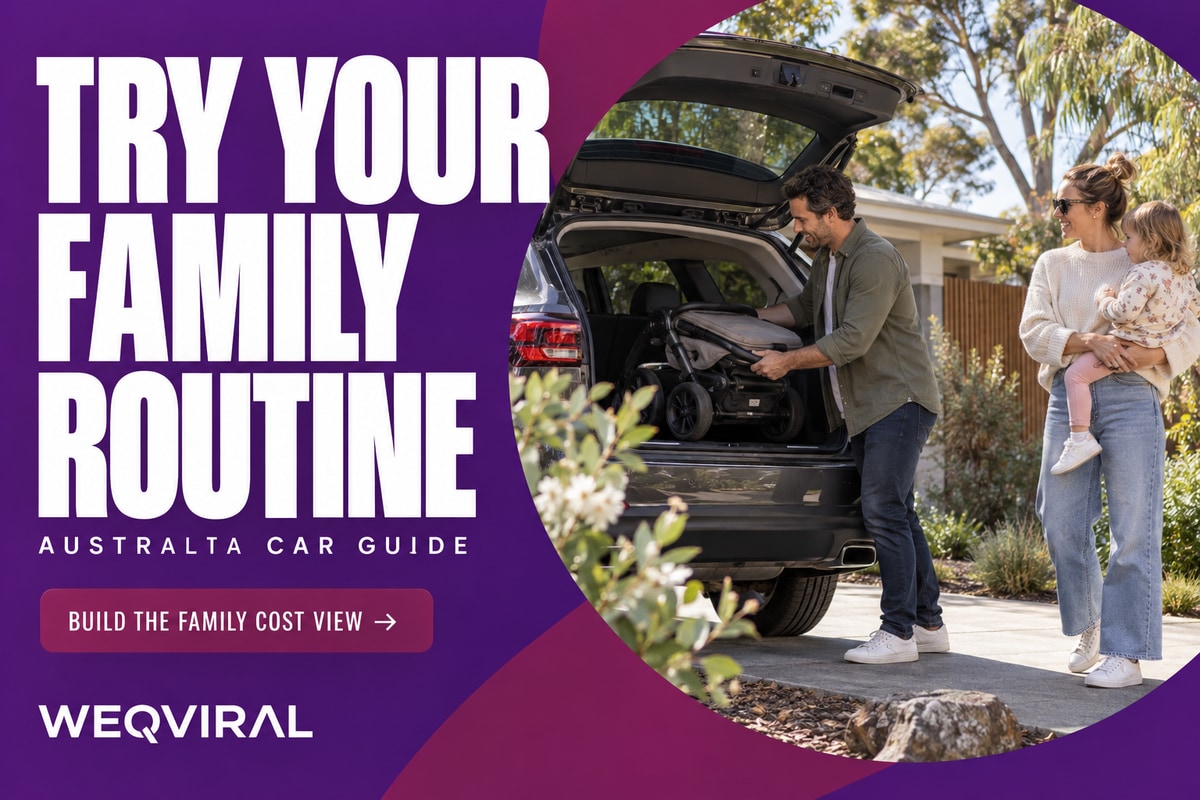
Test the equipment and people you actually carry
Check the candidate vehicle with the relevant child seats and normal equipment using appropriate fitting guidance. Evaluate access, loading and visibility in the real configuration. A large exterior or an SUV label does not settle child-seat compatibility, cargo fit or ease of parking. Keep the observations specific to the variant and year being considered.
Use an ordinary week before an exceptional trip
List recurring journeys, passengers, distance and parking constraints. Separate a frequent need from a rare one that may have another practical solution. If comparing two cars, use the same routine and record where each creates a different compromise. An editorial checklist cannot rate safety or predict a family's preferences; vehicle-specific safety information remains a separate source.
Quote the actual candidates
Obtain property-insurance quotes for the real vehicles, drivers and use. Add financing, rego/CTP, energy and upkeep assumptions to a common planning month. A higher vehicle price may be only one cost difference. Use current ANCAP information for the applicable vehicle and rating period separately from the budget; neither a body style nor a monthly total is a safety score.
An Australian planning example
Two fictional family-car scenarios have loan payments of AUD 520 and AUD 610, while property insurance contributes AUD 150 and AUD 170 per planning month. Before other ownership inputs, the combined lines are AUD 670 and AUD 780: an AUD 110 difference.
How to read it: That difference is cost arithmetic for entered assumptions. It does not establish equivalent safety, child-seat fit, cargo room or suitability. Test those practical questions independently.
Choose the question to answer next
Choose the ownership-budget route when the actual candidates and their routine are known. Choose insurance review when the quote scope or assumptions differ. Keep a practical-fit record and vehicle-specific safety information alongside both routes.
Australian reference: ANCAP — check the actual vehicle rating. Use the current provider and relevant state or territory authority for the actual terms and process.