
AUSTRALIA · ENGLISH GUIDE · VALUES IN AUD
Compare family cars with the same ordinary routine and a complete cost boundary. Test the actual vehicle configuration, then quote and model its ownership costs. Keep safety evidence, practical observations and cost arithmetic as connected but separate views.
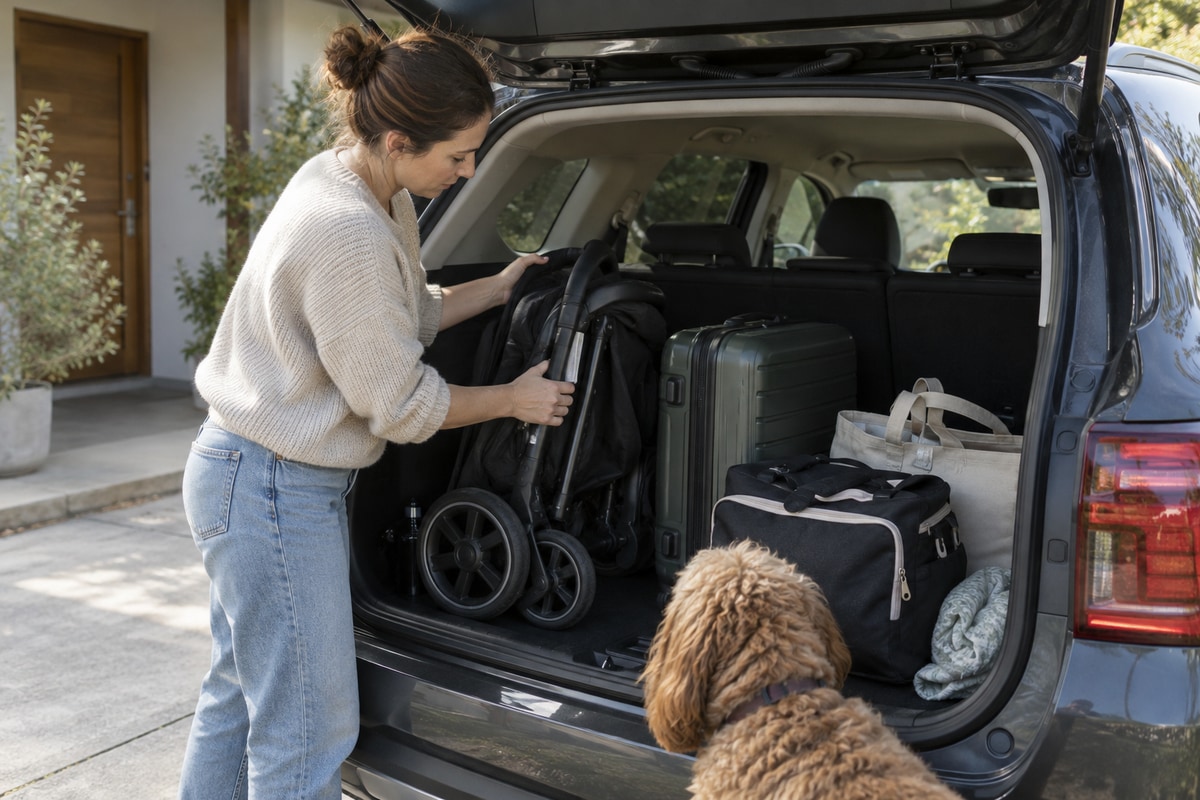
Describe the ordinary week in concrete terms
Record passengers, relevant child seats, equipment, repeat journeys and parking arrangements. Note the combinations that occur together, such as carrying a pram and shopping while seats are fitted. Separate frequent requirements from occasional trips. This establishes what to test in each candidate rather than starting from a body-style label. If a rare need has another possible arrangement, keep its cost and practicality visible instead of assuming a larger vehicle automatically solves every case. The guide does not choose a vehicle for a household; it helps make the comparison specific.
Test the actual variant and configuration
Evaluate access, loading, visibility and parking with the equipment normally used. Follow appropriate child-seat fitting guidance and the vehicle's instructions rather than treating a casual fit check as certification. Record what you observed and what needs professional clarification. A demonstration car with different seats or equipment may not answer the question for the chosen variant. The same caution applies to cargo capacity figures: verify the relevant real configuration. Keep vehicle-specific safety information, including the applicable ANCAP rating context, separate from your observations and the cost worksheet.
Two fictional family-car scenarios have loan payments of AUD 520 and AUD 610, while property insurance contributes AUD 150 and AUD 170 per planning month. Before other ownership inputs, the combined lines are AUD 670 and AUD 780: an AUD 110 difference.
How to read it: That difference is cost arithmetic for entered assumptions. It does not establish equivalent safety, child-seat fit, cargo room or suitability. Test those practical questions independently.
WEQVIRAL · AUSTRALIA · DECISION FRAME
Compare the actual ordinary week
Practical fit
Test the relevant seats, equipment, access and parking.
Vehicle evidence
Use the applicable safety information independently of body style.
Same cost boundary
Quote each actual candidate and use consistent distance and ownership inputs.
Practical observations + vehicle evidence + cost view remain distinct.
Build the same cost boundary for each candidate
Use its proposed loan payment and frequency, a vehicle-specific insurance quote, applicable rego/CTP inputs, energy, parking and your chosen upkeep reserve. Keep distance and usage assumptions aligned when comparing two cars for the same routine. If one proposal includes different products or a different deposit, show those differences. The example below combines financing and insurance only to isolate two lines; it is not a complete ownership total. Add the remaining costs before reading the full planning month and retain the actual debit and renewal dates.
Compare insurance with matching assumptions
Quote the actual drivers, vehicle variant and intended use. Check cover type, excess, exclusions and valuation basis rather than comparing premium alone. CTP and property cover have different scopes; use the insurance guide when those labels are unclear. A cheaper quote built with a different driver or coverage assumption does not isolate a vehicle-cost difference. Keep any insurer or lender requirements attached to the actual proposal. A worksheet can total costs but cannot assess a claim or determine that a policy is appropriate for every family circumstance.
Keep practical compromises visible alongside cost
Write what each candidate does well and what remains unresolved for the ordinary week. Compare the full cost and retained purchase-day cash without converting those practical observations into an invented numeric rating. If you change the candidate or configuration, revisit the fit and quotes. A smaller planning month may help the budget while leaving a loading or access issue; a vehicle that fits equipment may still require a different cash plan. The useful result is a specific record of routine, observed fit, current vehicle evidence and named cost assumptions, so a decision is based on the actual candidates rather than generic family-car claims.
Use the right worksheet for the next step
Use the ownership worksheet for the candidate's actual quoted costs. Keep the practical-fit notes and vehicle-specific safety evidence beside it; the cost total is not a safety or family-suitability rating.
The connected decision
Choose the ownership-budget route when the actual candidates and their routine are known. Choose insurance review when the quote scope or assumptions differ. Keep a practical-fit record and vehicle-specific safety information alongside both routes.
Return to the starting question if you need to choose a different route.
Australian reference: ANCAP — check the actual vehicle rating. Use the current provider and relevant state or territory authority for the actual terms and process.