
A brake concern needs a qualified assessment. Before comparing repair prices, identify the findings and exact scope rather than naming parts based on a noise or online description.
Describe the observation safely
Tell the shop when you noticed the concern and what happened, without attempting unsafe road tests. Follow the manual and professional assistance if operation may be unsafe.
Record a warning message accurately. This article does not decide whether a car with a brake symptom is safe to drive or provide a remote diagnosis.
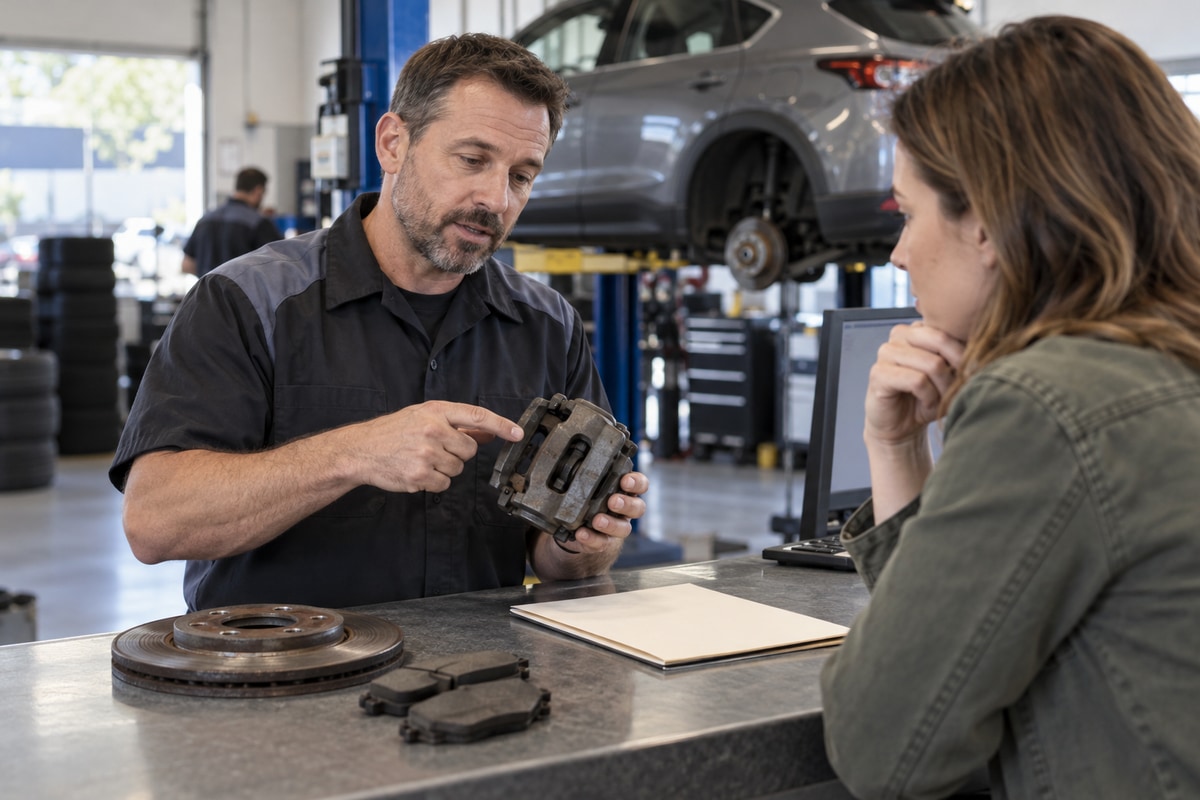
Ask the technician to explain the evidence behind the recommended work and what remains uncertain. Distinguish inspection results from a provisional quote made before inspection.
A noise can prompt a question, but the estimate needs the vehicle-specific assessment. Do not assume every brake concern means identical work on all wheels.
Make the brake estimate answer a specific diagnosis
Describe what you observed, when it happened and any relevant recent work. Ask the shop which examination or test supports the recommended repair. A noise, warning or vibration is a starting observation; it is not a complete parts list. If braking seems unsafe, stop using the vehicle and obtain appropriate qualified assistance rather than extending a driving experiment.
Request an itemized estimate with the affected components, parts, labor and diagnostic charges. Ask what is necessary now, which items need further assessment and how added work will be authorized. Comparing two prices is useful only when both scopes address the same supported findings. A cheaper undefined brake job and a more detailed diagnosis may be different services rather than competing prices for identical work.
Compare estimates only after their diagnostic scope is clear
Two illustrative quotations list $350 and $620 for brake-related work. Ask what each includes: inspection findings, components, labor and related services. A smaller total may describe fewer items or a different scope. The driver's sound or vibration is an observation; the provider's assessment must explain the proposed work and any safety instruction.
Keep authorization and the professional recommendation about timing with the estimate. This guide does not authorize driving with a suspected problem. Once the actual work is defined, put its cost and date into the maintenance plan rather than assuming a recurring reserve is the quoted bill.
Compare the same repair scope
Ask for parts, labor and related services to be itemized. Use the exact vehicle and compare equivalent scopes.
One price may include additional work or a different product, so comparing only the total may conceal the difference. If an estimate changes after further examination, ask which new finding explains the change.
Save the findings and invoice and ask about any instructions or follow-up applicable to the work. Keep routine inspection planning separate from a newly diagnosed repair.
This guide does not publish universal replacement mileage or claim that a completed repair prevents all future issues. It helps you understand which work is actually being quoted.
Agree on how extra findings will be handled
A shop may discover another issue after the initially authorized work begins. Ask in advance who contacts you, what evidence and revised estimate you receive, and what approval is required before expanding the scope. Keep that communication with the final invoice. After the repair, ask what was completed and what follow-up applies; payment alone does not explain the work or close an unresolved concern.
At a glance: what to check
| Decision point | Practical check |
|---|---|
| Describe the observation safely | Tell the shop when you noticed the concern and what happened, without attempting unsafe road tests. |
| Request the measured findings | Ask the technician to explain the evidence behind the recommended work and what remains uncertain. |
| Compare the same repair scope | Ask for parts, labor and related services to be itemized. |
| Keep a completion and follow-up record | Save the findings and invoice and ask about any instructions or follow-up applicable to the work. |
Summary of the checks explained in this article. Keep the document, quote or professional finding beside each item; an estimate is not a completed check.
Questions to resolve before the next step
Can I choose the required parts from an online symptom list?
Use the actual vehicle diagnosis. Similar symptoms can need assessment, and a list cannot establish the correct repair scope remotely.
What should I compare between two brake estimates?
Compare findings, components, parts, labor, diagnostic scope and stated warranty, not only each total at the bottom.
For the relevant official guidance, consult FTC: auto repair basics and FTC: warranties and service contracts. Use each resource for its stated scope; the actual vehicle documents, written quote and applicable jurisdiction still determine the details of your case.