
An inspection is most useful when the shop knows which vehicle you are considering and what you need to decide. Ask about scope, findings and costs before treating the appointment as a pass-or-fail certificate.
Identify the exact car and your concern
Provide year, version, VIN, mileage and available service records. Describe symptoms you noticed rather than guessing a repair.
Tell the shop about intended use, such as a long commute or carrying family equipment. Confirm what the inspection includes and which systems or inaccessible areas it cannot evaluate. A general booking name does not define the scope of the technician's work.
Request a distinction between work requiring immediate attention, scheduled maintenance and items needing further diagnosis. Ask the technician to explain the evidence for a finding.
Do not turn an unconfirmed symptom into a fixed repair price. A written report should help you form questions for the seller, not promise that the vehicle will never develop a problem.
Ask the inspection shop for findings you can act on
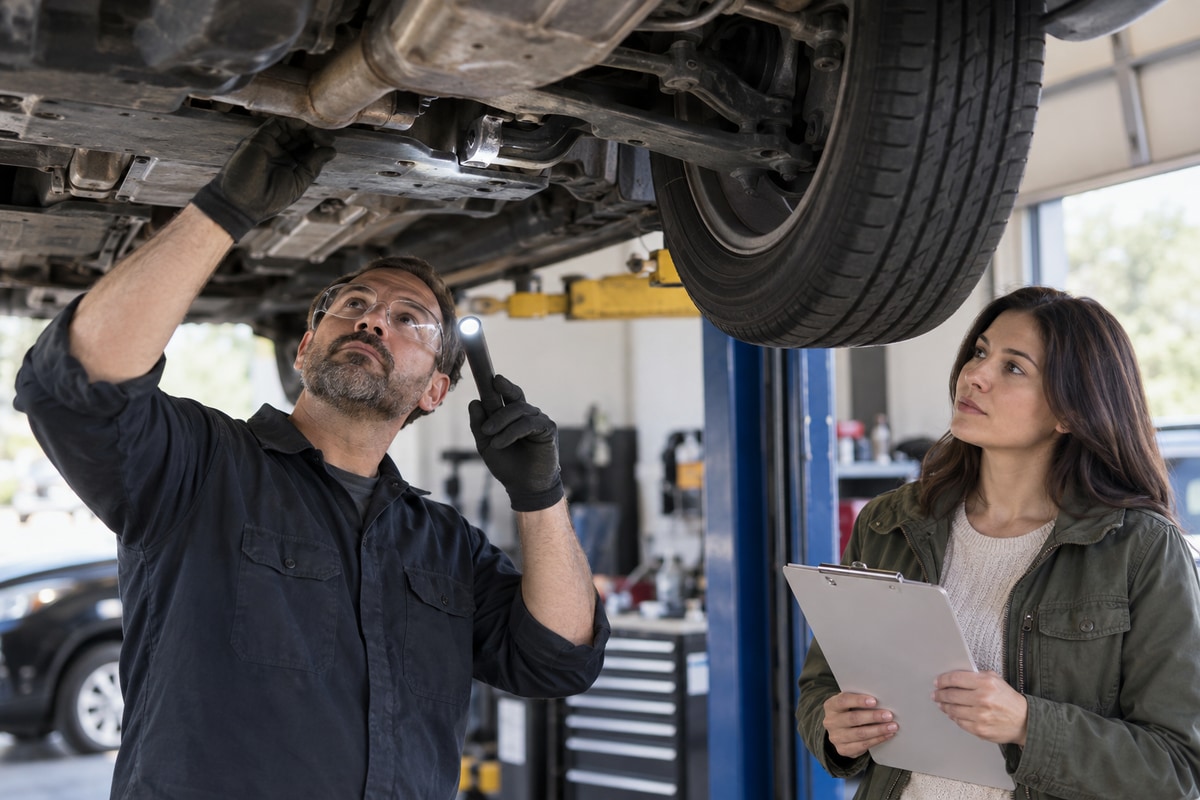
Give the independent shop the exact vehicle, your observations and any records supplied by the seller. Ask which areas the inspection covers and which require additional work or cannot be assessed under the conditions. A clearly defined inspection is more useful than an undefined promise to check everything. Confirm the fee and how you will receive the report before the visit.
Ask the report to distinguish safety concerns, near-term repair recommendations and routine maintenance. Request the evidence behind important findings and an itemized estimate where the shop can provide one. These categories help you assess whether the purchase budget and intended use still fit. They should not be turned into a blanket certification that the car will remain problem-free.
Turn a visit question into a defined inspection task
A buyer observes a vibration during a planned test drive. Record when it happened, the route conditions and any warning shown; do not name a failed part from that observation alone. Give the record to the independent shop and ask what its inspection can evaluate. Obtain the scope, findings and any estimate for recommended work as separate entries.
If the seller offers to correct an item, ask for the written work and completion record before treating it as resolved. A history report, a mechanic's finding and a seller's promise have different roles. The worksheet preserves that distinction and leaves an item open until the relevant evidence or decision is available.
Connect findings with estimates
Obtain itemized estimates for identified work and ask whether further testing could change them. Record parts, labor and timing where provided.
Separate an immediate expense from a future maintenance provision. The purchase price becomes easier to compare when you can see work already required, without assuming that every listed observation is equally urgent or already included in the seller's price.
Save the report with vehicle identity and date. Use it alongside the history report, title review and written purchase terms.
If the seller proposes to repair a finding, ask how completion will be verified before closing. An inspection is evidence about a scope at a particular time; it is not a title guarantee, a loan approval or an insurance policy.
Turn two different findings into two different decisions
A report noting an identified tire replacement need gives you a specific cost to quote and include in the purchase plan. A report describing an unresolved major warning calls for more investigation before you can price the problem. Treating both as a small negotiation discount would hide the different uncertainty. Ask the shop what additional assessment is needed, and record what the seller permits or refuses.
At a glance: what to check
| Decision point | Practical check |
|---|---|
| Identify the exact car and your concern | Provide year, version, VIN, mileage and available service records. |
| Ask for findings in three groups | Request a distinction between work requiring immediate attention, scheduled maintenance and items needing further diagnosis. |
| Connect findings with estimates | Obtain itemized estimates for identified work and ask whether further testing could change them. |
| Keep the inspection and transaction separate | Save the report with vehicle identity and date. |
Summary of the checks explained in this article. Keep the document, quote or professional finding beside each item; an estimate is not a completed check.
Questions to resolve before the next step
Does a clean history report replace the independent inspection?
They answer different questions. Review records and current condition separately; neither is a promise that every possible issue has been identified.
What if the seller will not allow an independent visit?
Record that limitation and decide whether you can proceed with the missing information. Do not present a seller's inspection as an equivalent independent assessment.
For the relevant official guidance, consult FTC: buying a used car from a dealer and FTC: auto repair basics. Use each resource for its stated scope; the actual vehicle documents, written quote and applicable jurisdiction still determine the details of your case.
For the specific next question, read Used car recall check: use the VIN before closing. Keep the result beside the same unit and dated records.
For the specific next question, read Used car title and registration: check the state-specific steps. Keep the result beside the same unit and dated records.
For the specific next question, read Used car mileage: compare dates, records and the current display. Keep the result beside the same unit and dated records.
For the specific next question, read Possible flood damage in a used car: ask for a professional review. Keep the result beside the same unit and dated records.
Before the visit, prepare a test-drive observation record so the shop receives the circumstances you actually observed.