
UNITED KINGDOM · ENGLISH GUIDE · VALUES IN GBP
A private-sale purchase needs a vehicle file and a clear payment sequence. Match the car’s identity with records, resolve discrepancies and keep finance and mechanical checks as separate questions.
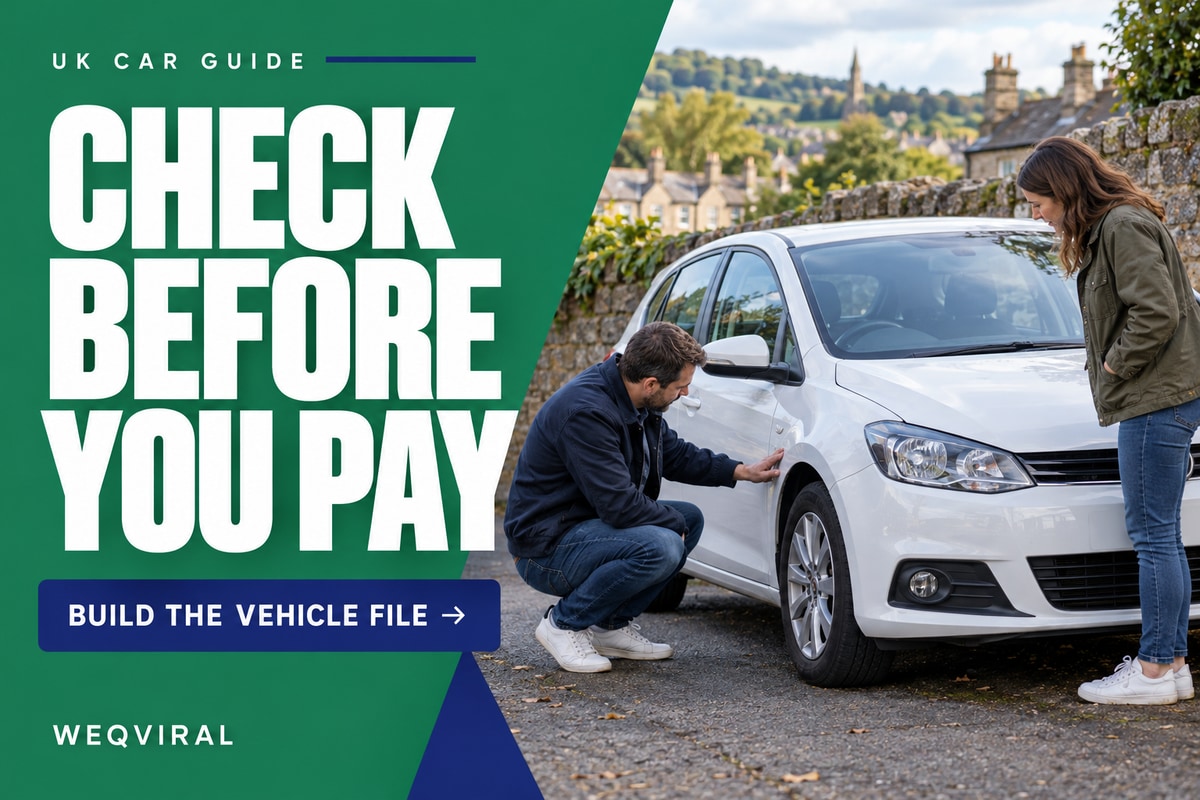
Start from the actual car
Registration, VIN and specification should refer to the same vehicle in the advert, physical car and records. A mismatch is a question to resolve before assuming the documents describe the car in front of you.
One record cannot answer everything
DVLA details, V5C, MOT history, a history check and an inspection have different roles. A tidy file does not by itself establish ownership, absence of outstanding finance or future reliability.
Price follows unresolved evidence
Known work and unanswered seller questions affect the purchase decision alongside price. Follow the condition guide if the main uncertainty is what needs repairing and when that cash is needed.
A UK planning example
Illustrative file: advertised registration matches the car, but a claimed completed repair has no invoice and a mileage entry needs explanation. Two facts are recorded as reviewed; the repair and mileage questions remain open.
How to read it: A checklist count should preserve those open questions. It must not convert a partly completed file into a safety or ownership pass.
Choose the question to answer next
Choose Connect UK private-sale identity, vehicle records and checks when the main question is private sale seller and dvla evidence. The other route, Compare UK used-car condition and known repair cash, handles the connected decision. The two guides answer different questions; a favourable figure in one does not settle the other.
UK reference: GOV.UK — check a used vehicle. Check the actual vehicle, written agreement and current rules for your part of the UK. This independent guide does not quote a live finance offer.