
UNITED KINGDOM · ENGLISH GUIDE · VALUES IN GBP
A private-sale purchase needs a vehicle file and a clear payment sequence. Match the car’s identity with records, resolve discrepancies and keep finance and mechanical checks as separate questions. This guide turns that question into a written comparison, a worked example and a worksheet you can change using your own records.
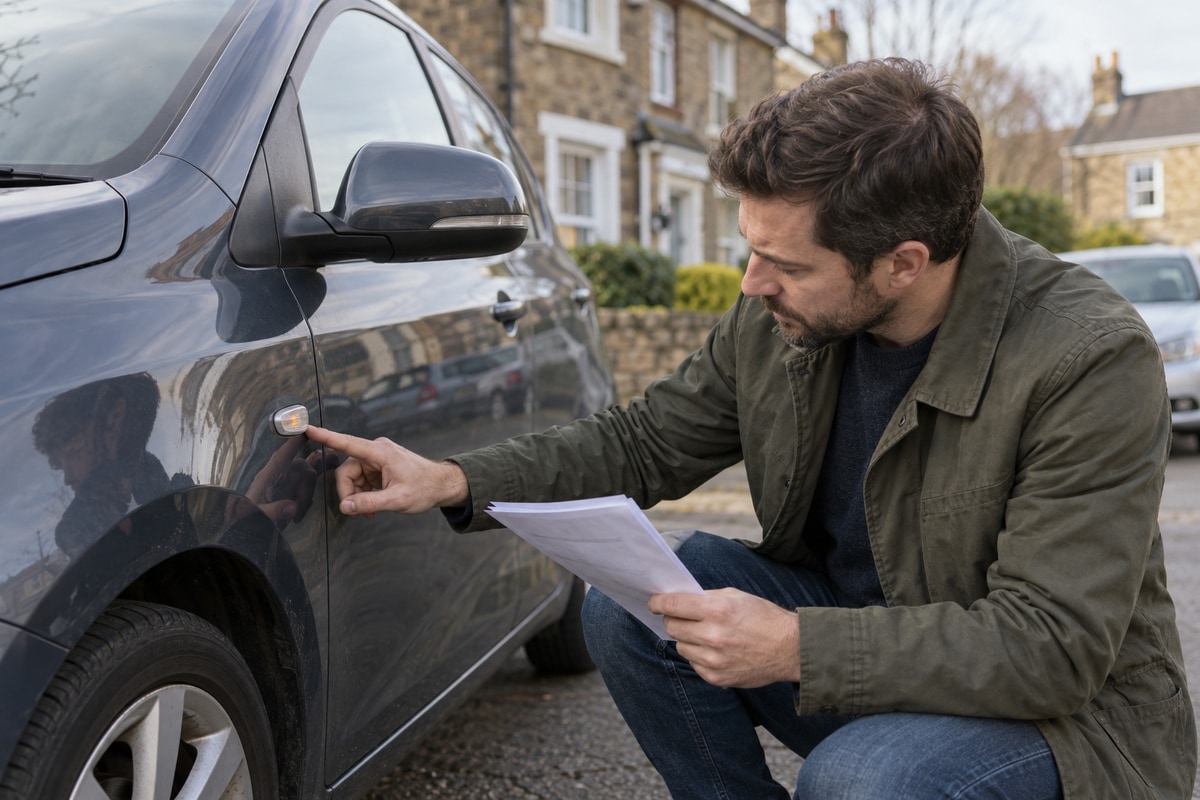
Match vehicle identity across the file
Record the registration and VIN observed on the vehicle, then compare with the advert and relevant documents. Resolve discrepancies before payment, rather than explaining them away because the price is attractive. GOV.UK’s used-vehicle guidance supplies the official checking route. Keep the date of a search and which vehicle it described; an old screenshot from another car is not current evidence.
Read the V5C for its actual role
The V5C records the registered keeper; it is not proof of ownership by itself. Ask the seller to explain their authority to sell and retain transaction evidence. Do not assume a matching name settles every ownership or finance question. If documentation is missing or inconsistent, use the official guidance and appropriate help rather than proceeding on a promise that it can be fixed later.
Illustrative file: advertised registration matches the car, but a claimed completed repair has no invoice and a mileage entry needs explanation. Two facts are recorded as reviewed; the repair and mileage questions remain open.
How to read it: A checklist count should preserve those open questions. It must not convert a partly completed file into a safety or ownership pass.
WEQVIRAL · UNITED KINGDOM · DECISION FRAME
Evidence has different roles
Identity
Match physical vehicle and records.
Transaction
Clarify seller authority and outstanding finance.
Condition
Use dated history and appropriate inspection.
Registered keeper record ≠ proof of ownership ≠ condition guarantee
Use MOT history as a timeline
Read recorded dates, mileage, failures and advisories from the official service. Ask for evidence of work claimed to resolve earlier issues. The record helps frame questions but is not a full mechanical inspection or a guarantee against future faults. A change in recorded mileage or unexplained gap needs clarification, not an automatic conclusion based on one entry.
Keep financial history and condition checks separate
Clarify outstanding finance and recorded vehicle-history issues through appropriate checks and sources. Our checklist does not perform a finance search, verify title or certify a search provider’s completeness. A professional inspection can address condition questions that records do not settle. Use the repair-budget guide to separate observed symptoms, expert findings and priced work.
Agree a documented transaction sequence
Keep the agreed price, vehicle identity, seller details, receipt and payment/transfer arrangements coherent. Where finance must be cleared, obtain an appropriate documented settlement route rather than trusting a verbal assurance. Confirm insurance and vehicle-tax requirements before road use using GOV.UK. This page does not move money or provide an escrow, verification or ownership-transfer service.
Pause the purchase decision when the file does not reconcile
List the exact unresolved item and who can answer it. A seller’s urgency is not evidence that a discrepancy is harmless. Private-sale and dealer rights can differ; seek appropriate advice for the actual transaction and part of the UK if a legal issue arises. The checklist is a record of reviewed questions, not a legal title certificate or a purchase recommendation.
Use the right worksheet for the next step
Use the UK used-car evidence checklist to organise this decision. Replace the example inputs with dated figures from your own quote. Keep the assumptions alongside the result, and take unresolved questions back to the actual provider or vehicle specialist.
The connected decision
Choose Connect UK private-sale identity, vehicle records and checks when the main question is private sale seller and dvla evidence. The other route, Compare UK used-car condition and known repair cash, handles the connected decision. The two guides answer different questions; a favourable figure in one does not settle the other.
Return to the starting question if you need to choose a different route.
UK reference: GOV.UK — check a used vehicle. Check the actual vehicle, written agreement and current rules for your part of the UK. This independent guide does not quote a live finance offer.