
An EV road-trip plan needs usable charging locations and enough flexibility for changes. Start with the actual car, route and conditions instead of treating an advertised range as a guaranteed driving distance.
Use vehicle-specific trip information
Check the manufacturer's guidance and available route-planning tools for the exact vehicle. Note that your trip assumptions include speed, weather, load and charging starting point.
Do not convert a rating into a promise that a particular route will require no stop. This article does not calculate a safe minimum charge for your trip.
Check connector, access arrangements, payment method and current location information with the provider.
A map entry alone does not confirm that every stall will be available or working when you arrive. Identify practical backup stops that fit the route and vehicle, rather than collecting an unfiltered list of nearby stations.
Build a route with alternatives you can actually use
For each planned stop, check connector compatibility, access, payment requirements and the operator's current information. Add an alternative location that is practical for the route. A station listing identifies a possibility; it does not establish that the equipment will be available and working when you arrive. Check again as the journey approaches and use current conditions during travel.
Use the actual vehicle's information and your observed consumption when planning. Route, weather, load and driving conditions can change the assumptions, so avoid turning an advertised range figure into a fixed stop schedule. Include waiting and charging in the travel plan. Ask whether your backup requires a different payment setup or operating hours so it is not merely another pin on the map.
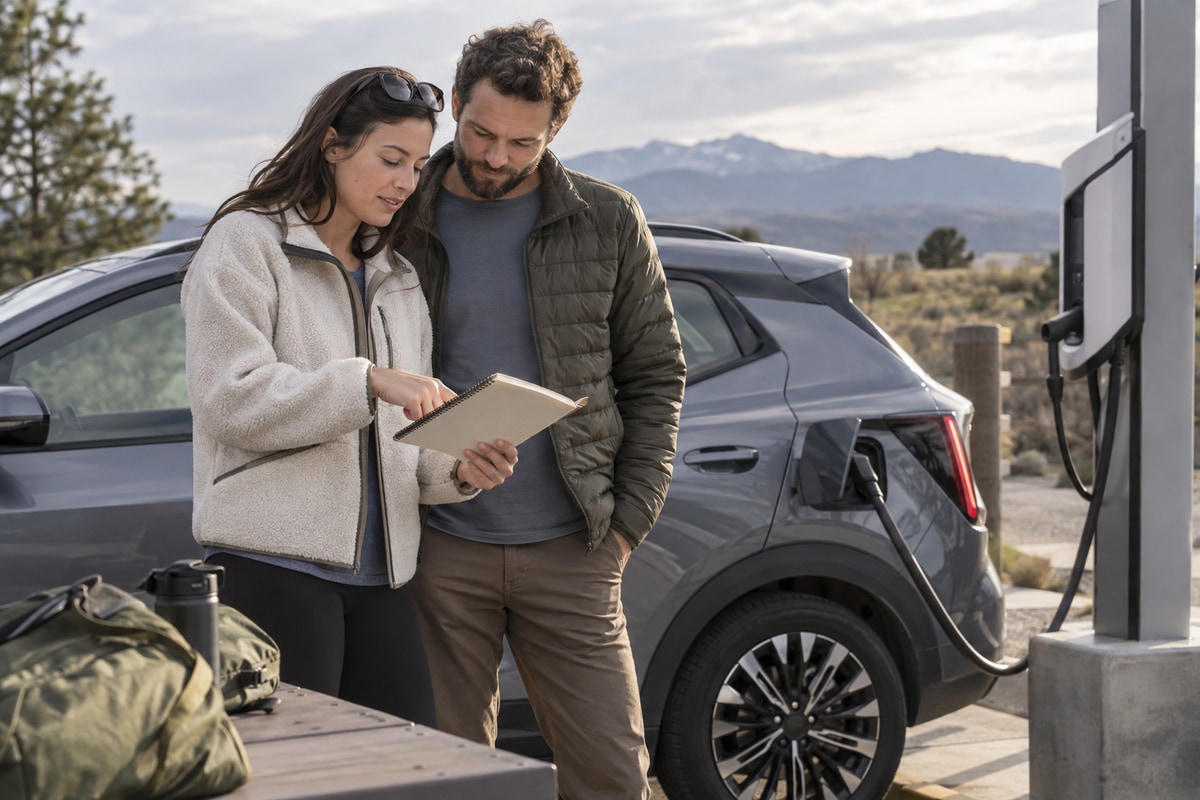
Keep a usable alternative beside the planned charging stop
For the intended route, check connector compatibility, access, operating information and a practical backup for each planned stop using the relevant current sources. A map marker alone does not confirm that the stop fits the unit or conditions when you arrive. Record the source and date, and use the vehicle's planning guidance for the journey.
The recurring energy worksheet can compare stated prices and use, but it does not forecast real range or certify a trip. If a route uses more public charging than your commute, make a separate scenario with that mix and label the change. Keep route feasibility as its own planning task.
Separate charging time from total stop time
Include travel to the station, any wait and the planned charging session in your schedule.
An advertised maximum charging rate does not define every session from start to finish. Use information appropriate to the car and equipment and leave uncertain timing labeled as an estimate.
Review current location status and route conditions through the relevant services. Save provider access details and consider what happens if the preferred stop is unavailable.
Keep costs dated and do not treat a sampled price as a universal tariff. The purpose is a repeatable trip plan with alternatives, not a claim that all journeys will match an ideal charging demonstration.
Test the routine on a less demanding trip
Before relying on an unfamiliar charging network for a remote journey, consider a shorter trip that lets you verify the vehicle, payment process and stop planning. Record what differed from your estimate and update the longer route. This does not guarantee later availability, but it replaces an untested assumption with a more useful operating record. Keep suitable alternatives for each important stop.
At a glance: what to check
| Decision point | Practical check |
|---|---|
| Use vehicle-specific trip information | Check the manufacturer's guidance and available route-planning tools for the exact vehicle. |
| Confirm charging compatibility and access | Check connector, access arrangements, payment method and current location information with the provider. |
| Separate charging time from total stop time | Include travel to the station, any wait and the planned charging session in your schedule. |
| Update the plan near departure | Review current location status and route conditions through the relevant services. |
Summary of the checks explained in this article. Keep the document, quote or professional finding beside each item; an estimate is not a completed check.
Questions to resolve before the next step
Does a station on a locator guarantee I can charge there?
Verify compatibility, access and current operator information. Availability and operation at arrival are separate questions.
Can I plan every trip from the same advertised range?
Use the actual vehicle guidance, route conditions and observed use. Keep estimates flexible rather than treating one headline figure as a guarantee.
For the relevant official guidance, consult DOE: electric-vehicle consumer resources and DOE: home-charging considerations. Use each resource for its stated scope; the actual vehicle documents, written quote and applicable jurisdiction still determine the details of your case.