
Home charging is a property and routine question as well as a vehicle feature. Confirm parking access, installation conditions and actual charging options before relying on a purchase calculation.
Map where the car will park
Identify the space you can use and who controls it. Ask about permission and applicable installation arrangements before assuming an outlet or charger can be added.
A nearby electrical source is not an assessment of suitability. Have a qualified installer evaluate the proposed setup; this guide does not provide wiring instructions.
Check the vehicle's compatible charging information and the equipment proposed by the installer.
Ask what is included in the quote and which work remains conditional on inspection or permission. Do not assume a model's maximum advertised charging rate describes what your property connection will deliver.
Resolve permission and installation before committing to the car
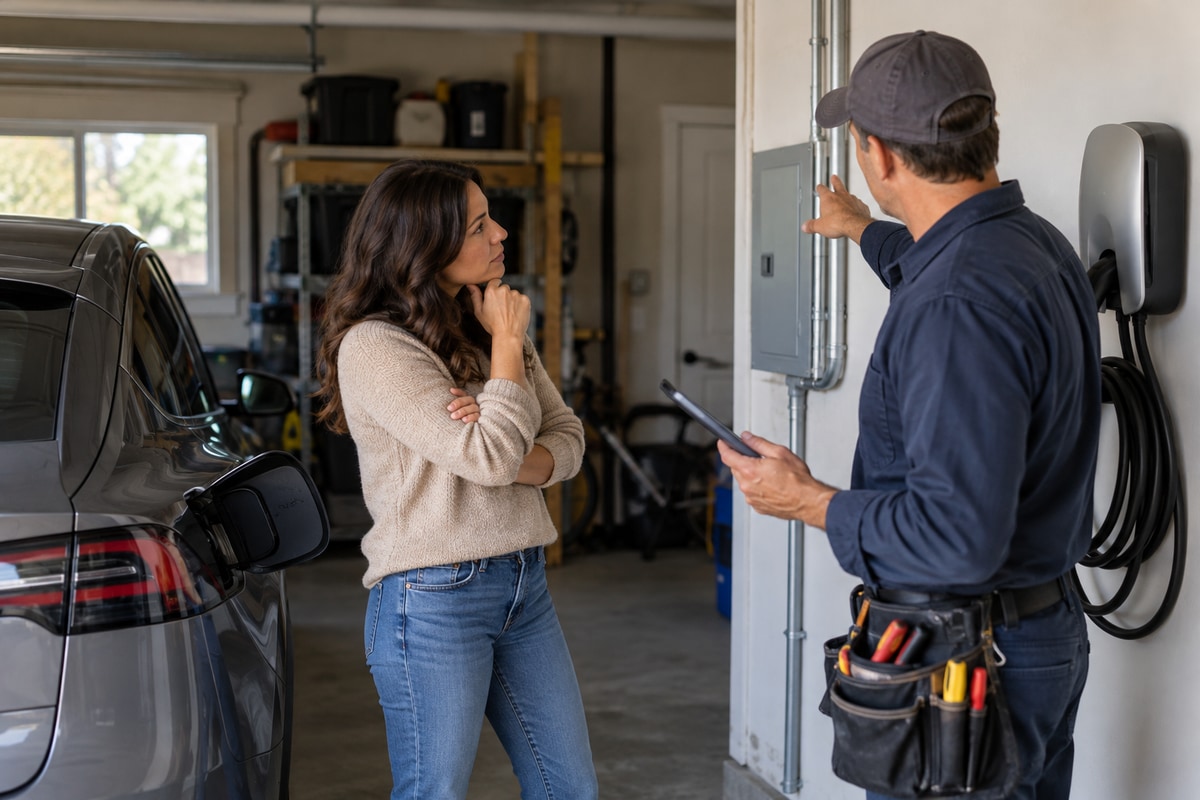
Identify where the vehicle will actually park and who controls that space and its electrical installation. A homeowner, renter and resident using shared parking can face different practical approval steps. Obtain the applicable permission and ask a qualified electrical provider to assess the proposed setup. An outlet being visible is not proof that it is suitable for the equipment or intended use.
Request a written scope covering the proposed equipment, installation work, applicable permits and other stated charges. Keep that one-off expense separate from electricity use. Ask when the installation can be completed and what your backup would be if it is delayed. Use the actual vehicle, equipment and parking conditions rather than a universal charging-time or installation-price claim.
Compare access before comparing electricity alone
An illustrative buyer has access to an authorized home charging location, while another relies on public stations. The same distance and vehicle consumption can produce different energy scenarios because the charging mix and prices differ. Confirm the access, required approvals and qualified installation assessment for the actual location before assuming a home rate is available.
Keep installation as a separate quoted initial cost. A $1,200 illustrative installation bill is not part of every month's electricity unless a real payment arrangement makes it recurring. The energy worksheet holds home and public prices and their share; the full monthly worksheet holds the other costs of the vehicle.
Use your tariff and driving routine
Record daily mileage, charging opportunities and the applicable electricity pricing information. Separate estimated energy use from a measured bill.
Include public charging in the scenario if you will sometimes rely on it. A national average or another owner's experience is not a confirmed cost for your home and vehicle.
Identify what you would do when the normal parking space or charger is unavailable. Check usable public options and access conditions rather than assuming every map marker will work for you.
Keep installation cost and recurring energy costs separate. The decision should rest on confirmed access, a defined quote and the actual car's information.
A delayed installation needs a usable fallback
Imagine the car is available this week but the permitted installation will not be ready until later. Identify accessible public options, their connectors, payment requirements and operating information before treating them as a workable temporary plan. Include the expected travel and charging time in your routine. A nearby station shown on a map is a candidate to verify, not guaranteed access whenever you need it.
At a glance: what to check
| Decision point | Practical check |
|---|---|
| Map where the car will park | Identify the space you can use and who controls it. |
| Match the car and charging equipment | Check the vehicle's compatible charging information and the equipment proposed by the installer. |
| Use your tariff and driving routine | Record daily mileage, charging opportunities and the applicable electricity pricing information. |
| Test an alternative charging plan | Identify what you would do when the normal parking space or charger is unavailable. |
Summary of the checks explained in this article. Keep the document, quote or professional finding beside each item; an estimate is not a completed check.
Questions to resolve before the next step
Can I buy the car first and assume any home outlet will work?
Confirm suitability with the actual equipment guidance and a qualified assessment, including the parking and permission situation.
Should the installation quote be hidden inside the monthly electricity estimate?
Keep the upfront installation scope and recurring energy assumptions separate so the timing and cost remain clear.
For the relevant official guidance, consult DOE: home-charging considerations and DOE: electric-vehicle consumer resources. Use each resource for its stated scope; the actual vehicle documents, written quote and applicable jurisdiction still determine the details of your case.
For the specific next question, read EV road-trip charging: plan stops and a usable backup. Keep the result beside the same unit and dated records.
For the specific next question, read Used EV battery information: records, inspection and warranty scope. Keep the result beside the same unit and dated records.