
A used EV purchase needs vehicle-specific battery information. Separate recorded condition, current inspection findings and the actual warranty instead of judging only by a displayed range figure.
Identify the vehicle and available records
Match VIN, version and vehicle history. Ask for service records and any battery-related assessment, noting date, method and issuer.
A number without context is difficult to compare. Do not assume a report for another vehicle or an old screenshot describes the current battery in the unit you plan to buy.
Find a qualified professional able to assess the vehicle and ask what can be checked. Distinguish observed information from a prediction of future life.
This guide does not interpret every battery metric or diagnose high-voltage systems remotely. Do not attempt to access high-voltage components yourself to verify a seller's claim.
Ask what the battery assessment actually measured
Identify the exact model, year and vehicle before evaluating battery information. Ask the qualified provider which diagnostic method was used, when it was performed and what its result means for that unit. Keep a dashboard range display separate from a technical assessment. A photograph of a range estimate cannot by itself establish remaining battery capacity or future performance.
Review available service and repair records, charging operation and any unresolved warnings. Ask the manufacturer or relevant warranty provider what written coverage remains for the exact vehicle and whether ownership transfer or other conditions affect it. Do not apply another model's warranty duration or scope as a promise for this car. Keep coverage and condition as related but distinct purchase questions.
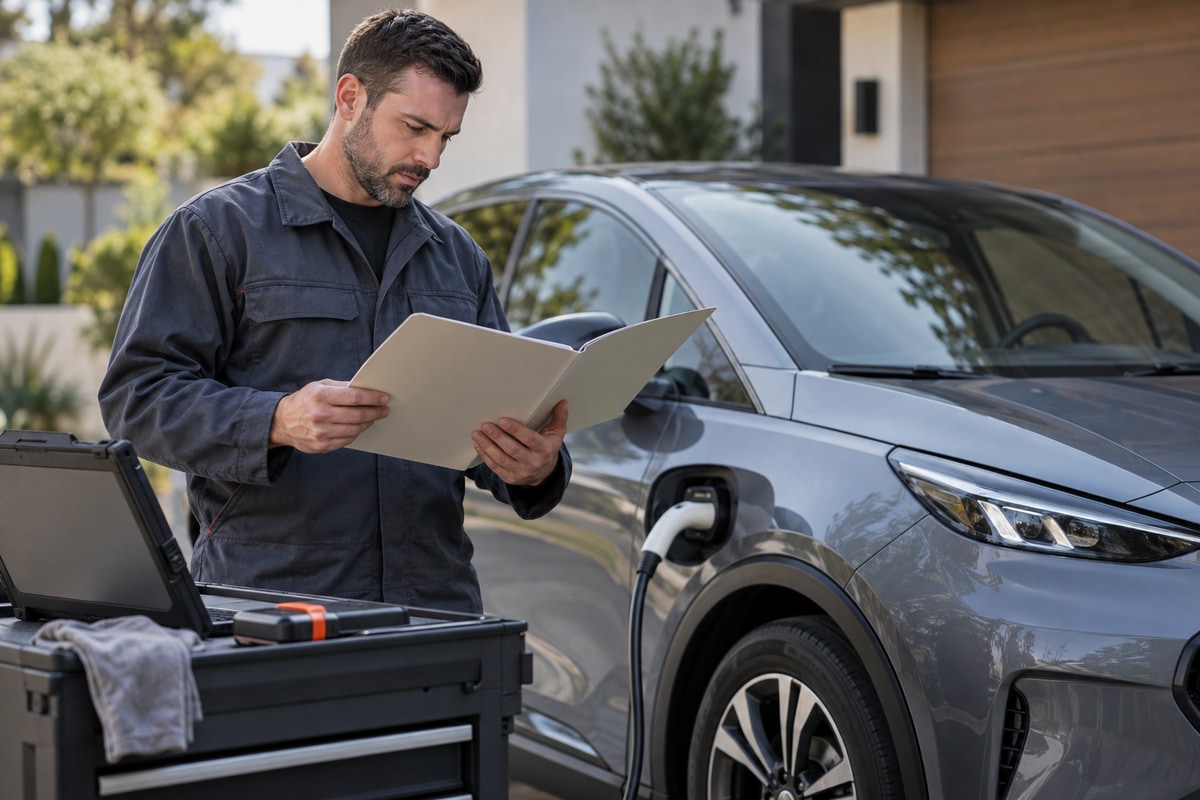
Separate battery records, inspection and warranty scope
A seller may provide a battery-related report from a particular date and test method. Record that scope and ask a qualified provider what it establishes for the actual vehicle. Match the written warranty to the VIN, dates, applicable limits and transfer provisions; a model-level headline does not answer every unit-specific condition.
Keep the current findings and unresolved questions in the inspection record. This website does not infer a battery diagnosis or remaining life from answers. For the purchase budget, price any identified work separately and compare charging access and insurance for that unit instead of treating electricity savings as the whole ownership cost.
Read the actual warranty terms
Check coverage, duration, limitations and transfer conditions with the relevant provider. A manufacturer's general advertisement is not a complete answer for the exact used vehicle.
Ask which information is needed to verify its current status. Keep warranty eligibility and current condition as separate questions; one does not establish the other.
Confirm compatible charging access and obtain estimates for known inspection findings. A displayed range is one observation under particular conditions, not a guaranteed distance for your daily use.
Save the records and unanswered questions before deciding. The purchase comparison should contain real evidence, not a universal battery-life promise or an invented replacement price.
A claimed percentage needs a method and a date
If an advertisement gives a battery-health percentage, request the supporting assessment and its explanation. Establish which vehicle it belongs to and what the method can and cannot conclude. If there is no supporting document, label the claim unverified rather than calculating a precise future range from it. Add charging feasibility and the independent findings to the complete purchase comparison.
At a glance: what to check
| Decision point | Practical check |
|---|---|
| Identify the vehicle and available records | Match VIN, version and vehicle history. |
| Ask the appropriate inspector about scope | Find a qualified professional able to assess the vehicle and ask what can be checked. |
| Read the actual warranty terms | Check coverage, duration, limitations and transfer conditions with the relevant provider. |
| Test the ownership fit | Confirm compatible charging access and obtain estimates for known inspection findings. |
Summary of the checks explained in this article. Keep the document, quote or professional finding beside each item; an estimate is not a completed check.
Questions to resolve before the next step
Can displayed range prove the battery's remaining capacity?
Do not treat the display as a complete health assessment. Request a qualified explanation and vehicle-specific evidence.
Does remaining warranty mean every battery concern is covered?
Read the actual coverage, conditions and claim process. Warranty scope and the assessment of current condition are different checks.
For the relevant official guidance, consult DOE: electric-vehicle consumer resources and FTC: warranties and service contracts. Use each resource for its stated scope; the actual vehicle documents, written quote and applicable jurisdiction still determine the details of your case.