
A hybrid and a plug-in hybrid can require different ownership routines. Confirm the exact powertrain and your charging access before assuming a fuel-saving scenario matches your life.
Identify the version, not just the badge
Read the vehicle information for the actual year and trim. A model family may include different powertrains, so a similar exterior is not enough.
Ask the manufacturer or dealer to explain operating and charging requirements. Do not treat every vehicle using hybrid in its name as having the same charging capability or battery use.
Record ordinary trip distance, parking and opportunities to charge when relevant.
A plug-in scenario based on regular charging needs a realistic place and time to do it. If that access is uncertain, build a separate scenario rather than assuming it will become available after buying the car.
Compare the plug-in choice with the routine you will keep
List your normal daily distance, parking time and realistic charging access. Compare the actual conventional hybrid and plug-in hybrid candidates with those conditions. Do not assume the presence of a charging port automatically creates savings. If you are unlikely to charge regularly, make that limitation part of the scenario instead of borrowing the assumptions of a household that charges at home.
Record electricity and fuel prices as dated local inputs, then keep the vehicle-specific use estimates transparent. Include purchase price, insurance, finance and any installation expense separately. Also describe longer trips, when your everyday pattern changes. The decision should remain understandable if one assumption changes, such as losing access to workplace charging or moving to different parking.
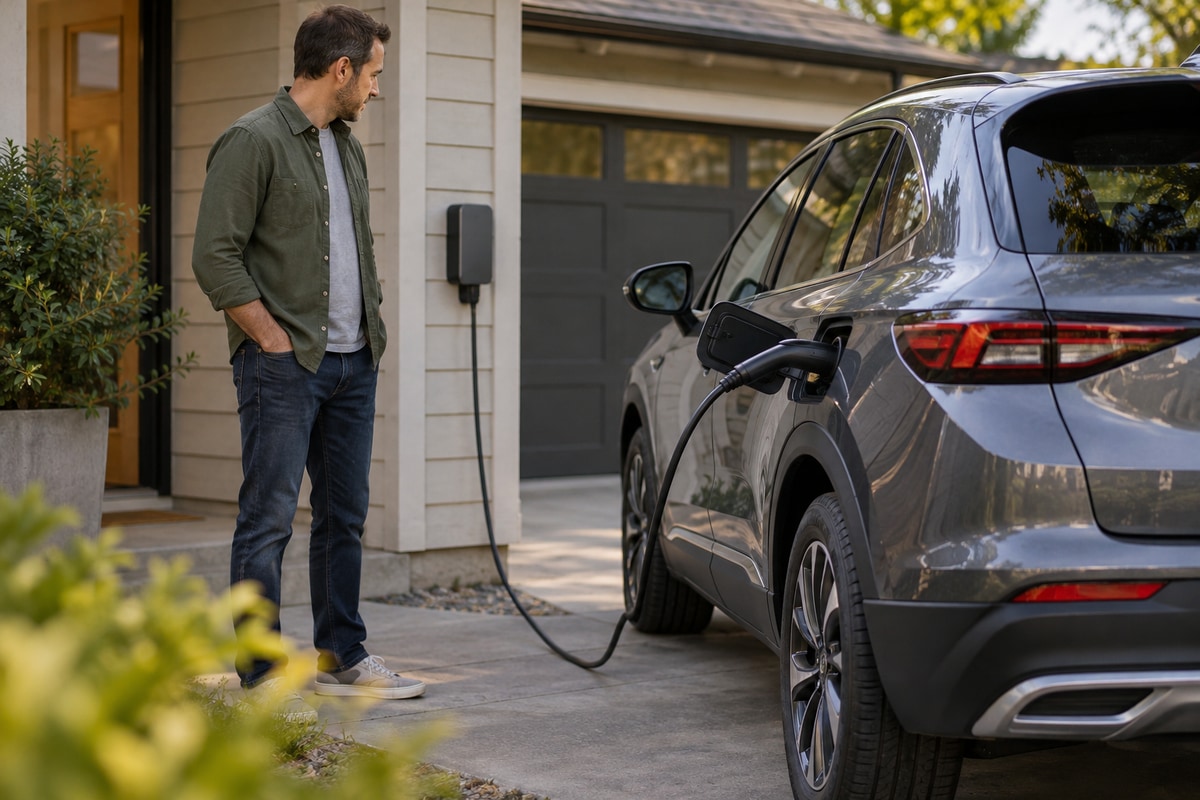
The charging routine changes which comparison is useful
A conventional hybrid and a plug-in hybrid have different charging tasks. For the actual plug-in unit, establish whether regular charging is practical and use the manufacturer's information for its operating modes. An electricity-only example cannot represent every mixed electric-and-gasoline journey, especially when the charging routine changes.
Keep the energy scenario's boundary explicit. The EV-versus-gas tool compares a stated electric scenario and a stated gasoline scenario; it does not model a plug-in hybrid's combined control strategy. For that unit, retain the separate mode and route assumptions, then use the full monthly budget to include financing, insurance and the planned energy amount.
Compare energy and purchase expenses separately
Quote insurance, financing and known service needs for the selected units. Use documented vehicle information and your energy prices for estimates.
Do not publish a fixed saving percentage based on someone else's route. A lower purchase price and a favorable ideal fuel figure answer different questions and should remain visible together.
For a used unit, add an independent inspection and applicable warranty review. Keep battery, charging and maintenance questions appropriate to the actual powertrain.
This article does not rank all hybrids or promise a specific fuel cost. The useful result is a comparison showing which routine you can support and which assumptions remain unconfirmed.
Two households can reach different conclusions
One household has confirmed charging access where the vehicle parks overnight; another relies on an unverified public location several miles away. Compare the time, access and cost assumptions separately for each. Neither scenario establishes a universal winner between vehicle types. Use the actual models and documents, then test whether the routine you are budgeting is one you can realistically maintain.
At a glance: what to check
| Decision point | Practical check |
|---|---|
| Identify the version, not just the badge | Read the vehicle information for the actual year and trim. |
| Describe how you would use it | Record ordinary trip distance, parking and opportunities to charge when relevant. |
| Compare energy and purchase expenses separately | Quote insurance, financing and known service needs for the selected units. |
| Prepare the evidence before choosing | For a used unit, add an independent inspection and applicable warranty review. |
Summary of the checks explained in this article. Keep the document, quote or professional finding beside each item; an estimate is not a completed check.
Questions to resolve before the next step
Is a plug-in hybrid automatically cheaper for every driver?
Compare the complete purchase and use scenario, including charging frequency and access. A vehicle-type label does not establish your savings.
What if my charging access changes after purchase?
Rework the use assumptions and budget. Do not treat the original charging routine as fixed when the actual access changes.
For the relevant official guidance, consult DOE: home-charging considerations and DOE: electric-vehicle consumer resources. Use each resource for its stated scope; the actual vehicle documents, written quote and applicable jurisdiction still determine the details of your case.