
A pickup purchase should start with the work you actually need to do. Cab, bed and configuration matter; the model family name alone does not identify capability or daily fit.
Define the job before shopping
List the passengers and cargo you regularly transport and how often. Check storage, loading access and whether the bed configuration suits the items.
Do not infer dimensions from a listing photo. If the truck will mostly commute or park in tight spaces, include those tasks rather than allowing an occasional imagined job to dictate the whole purchase.
For any load or towing plan, consult the actual vehicle labels, manual and manufacturer information for that configuration. Do not use a maximum advertised for the model family as if it applied to every unit.
Ask the appropriate professional to clarify equipment or ratings you cannot verify. This guide does not calculate a safe towing combination.
Specify the job before evaluating the pickup
Describe the loads, people and equipment you actually intend to carry, including how often and over which routes. Compare those needs with the documentation for the exact truck and configuration. Cab, bed, powertrain and equipment can differ within a model family. Do not infer payload or towing suitability from a badge, a photograph or the largest number in a model-range advertisement.
Measure access to your normal parking and loading locations. Check the bed opening, tie-down arrangements and passenger needs during a visit. Ask an insurer about your actual use, particularly when work or deliveries are part of the plan. Keep purchase, insurance and running estimates beside the practical requirements so a truck that fits the load does not disappear into an incomplete budget.
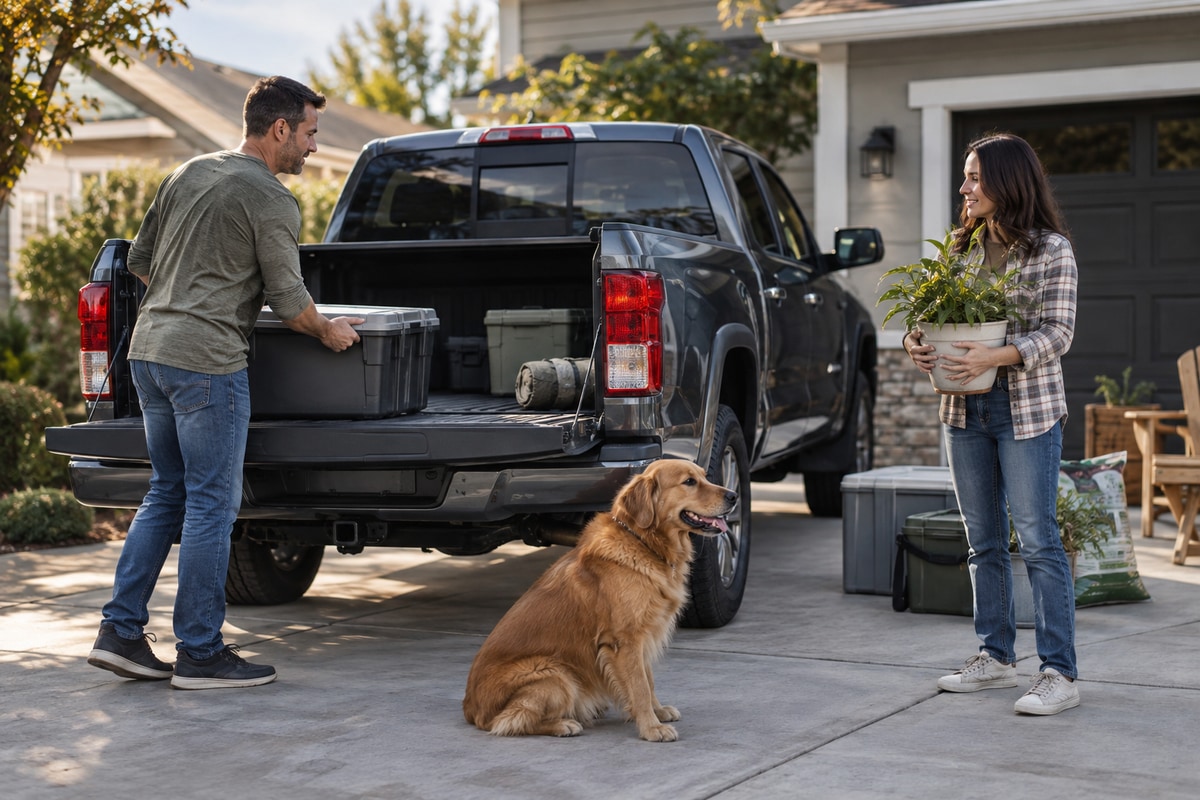
Match the work requirement to the exact configuration
A model-range towing headline can refer to a different engine, cab or equipment from the unit on the lot. Record that unit's configuration and use its manufacturer information and labels to verify the relevant ratings. Include occupants, cargo and equipment in the task, and confirm any trailer requirements through the appropriate guidance rather than treating a budget guide as a capability certification.
Test the parking and loading arrangement as well. Then price the insurance, energy and separate equipment purchases for that intended use. The pickup monthly guide connects the verified configuration to those expense lines, so the financing quote describes the vehicle that actually serves the job.
Check the used truck's condition
Give the independent inspector relevant observations and any available maintenance records. Describe intended use without guessing that a particular cosmetic mark proves previous hard use.
Ask what systems need examination and what remains uncertain. A visually tough vehicle can still have expensive work pending; a clean bed does not establish a light-use history.
Quote insurance, tires and required service for the selected version. Add fuel, parking and purchase terms.
If a less costly vehicle solves most tasks, build that alternative separately. The decision record should show actual fit and documented capability, not a promise that every pickup will handle any future job you might imagine.
The same model name can describe a different configuration
Two pickups with the same model name may have different cab, bed or equipment details. Record the specific vehicle identification and applicable manufacturer information before transferring a capability claim from one to the other. If your load information is uncertain, measure it and obtain qualified guidance rather than treating a guess as a permitted limit. The shortlist should follow the actual job and documentation.
At a glance: what to check
| Decision point | Practical check |
|---|---|
| Define the job before shopping | List the passengers and cargo you regularly transport and how often. |
| Use vehicle-specific capability information | For any load or towing plan, consult the actual vehicle labels, manual and manufacturer information for that configuration. |
| Check the used truck's condition | Give the independent inspector relevant observations and any available maintenance records. |
| Compare full ownership scenarios | Quote insurance, tires and required service for the selected version. |
Summary of the checks explained in this article. Keep the document, quote or professional finding beside each item; an estimate is not a completed check.
Questions to resolve before the next step
Can I use the highest advertised towing figure for any truck in that range?
Confirm the exact configuration and applicable manufacturer guidance. A range-level headline does not establish this vehicle's permitted use.
Should I tell the insurer about delivery or work use?
Describe the actual use when obtaining the quote and ask which terms apply. Do not compare a different use scenario as though it were equivalent.
For the relevant official guidance, consult NAIC: comparing auto insurance and FTC: auto repair basics. Use each resource for its stated scope; the actual vehicle documents, written quote and applicable jurisdiction still determine the details of your case.