
A suspected flood history calls for documented questions and an independent inspection. A dry interior photo or a reassuring history result cannot by itself settle the car's present condition.
Record observations without diagnosing
Note odors, unusual stains or other concerns you observed and ask the seller about them. Avoid asserting that one sign proves flood damage.
Match any relevant history or title entries with the vehicle and their dates. Your initial task is to identify what needs explanation, not label a seller's car from an image.
Tell an independent shop why you are concerned and ask what systems and areas it can examine. Some conditions may require additional testing or remain inaccessible.
Obtain a report that separates observed evidence from uncertainty. Do not attempt electrical disassembly yourself to confirm a suspicion before buying.
Separate flood-history questions from a visual impression
Ask the seller directly about known water exposure, damage, repairs and title information, and retain the written response where available. Review history information for the exact VIN, then give any concern to an independent professional. A clean-looking interior or an empty report entry cannot settle the vehicle's prior exposure or current safety.
Ask the inspector to explain the assessment scope and any areas that cannot be resolved during the visit. Obtain supporting repair records when they exist. Keep uncertainty about electrical or other significant damage separate from a simple price negotiation. An attractive discount does not answer a missing technical question, and this article cannot certify that a particular flood-exposed vehicle is safe to operate.
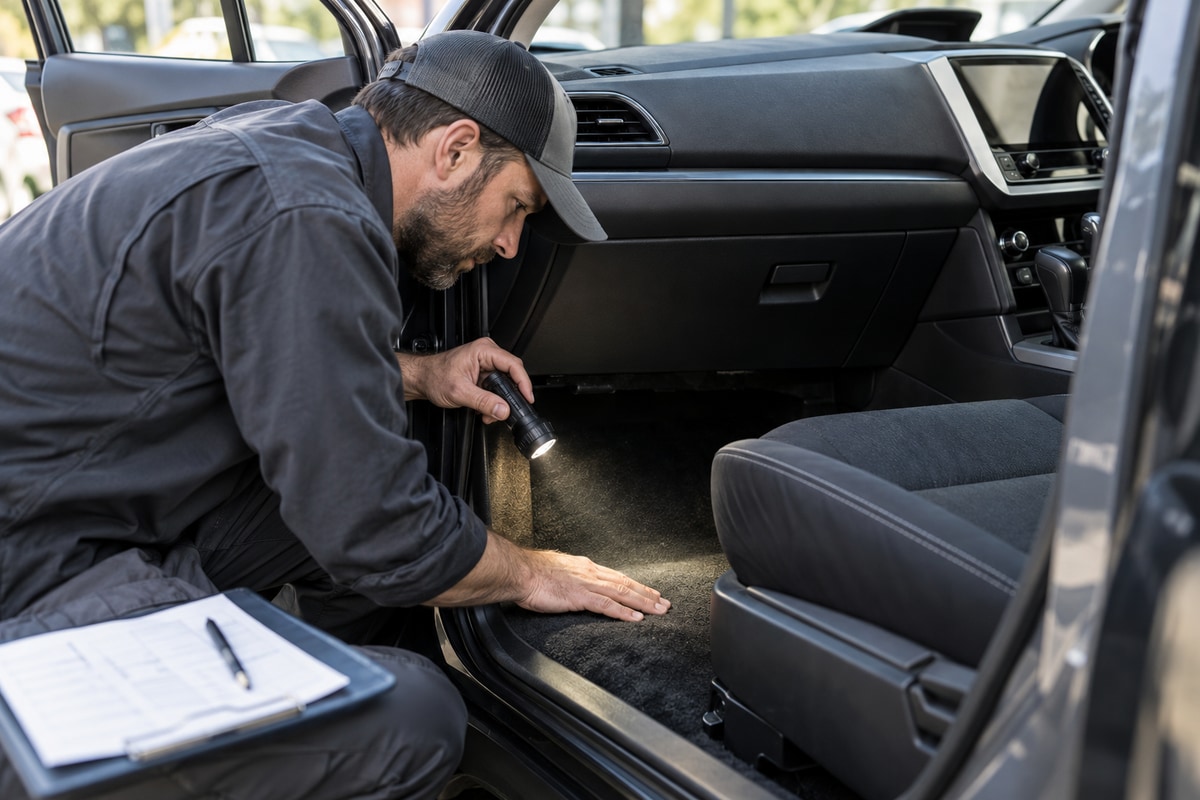
A concern should become a professional question
A buyer notices an unusual odor or residue and has questions about the vehicle's history. Record the observation and available documents, then request an independent assessment within an agreed scope. Those observations alone do not establish flood damage or identify the extent of a problem. Give the shop the specific concern rather than asking it to certify a conclusion you have already made.
Keep any history result, seller statement and professional finding as separate records. If access to inspect is limited, preserve the limitation and the unanswered question. The worksheet makes that uncertainty visible beside the VIN and planned purchase; it does not turn a checklist into a diagnostic test.
Connect documentation and findings
Request relevant repair or service records from the seller where available. Compare those with the inspection and the applicable title information.
A repair invoice can show work performed without proving that every possible related problem has been eliminated. Keep the question about current condition separate from what a record says happened earlier.
Ask for estimates and explanations of identified issues, and retain unanswered points as pending.
No universal repair budget in this article certifies a water-exposed car safe or economical. If a concern cannot be resolved within the inspection scope, do not replace that uncertainty with an assumption of trouble-free ownership simply to complete the purchase.
A discounted price is not evidence of a completed repair
Suppose a seller explains a low price by referring to earlier water damage but has no repair documentation. First obtain the available history and a professional assessment of the actual vehicle. If the assessment remains limited, record what is still unknown instead of replacing it with an arbitrary repair allowance. Compare another candidate using the same standard of evidence rather than treating the discount as a resolution.
At a glance: what to check
| Decision point | Practical check |
|---|---|
| Record observations without diagnosing | Note odors, unusual stains or other concerns you observed and ask the seller about them. |
| Ask about inspection scope | Tell an independent shop why you are concerned and ask what systems and areas it can examine. |
| Connect documentation and findings | Request relevant repair or service records from the seller where available. |
| Use uncertainty in the decision | Ask for estimates and explanations of identified issues, and retain unanswered points as pending. |
Summary of the checks explained in this article. Keep the document, quote or professional finding beside each item; an estimate is not a completed check.
Questions to resolve before the next step
Does a report without flood information rule out exposure?
Check the report's limitations. Absence of a listed record is not a certification that the event never occurred.
Can smell or upholstery appearance decide the issue?
They may prompt questions, but do not treat a simple visual or smell check as a conclusive professional assessment.
For the relevant official guidance, consult NHTSA: flood-damaged vehicles and DOJ: understanding an NMVTIS report. Use each resource for its stated scope; the actual vehicle documents, written quote and applicable jurisdiction still determine the details of your case.