
A history report and an inspection answer different questions. Use reported events to prepare your visit, then evaluate the car's current condition through an independent inspection.
Match the report to the unit
Compare VIN and vehicle details with the car and documents. Keep the report date and identify its provider.
A report for a similar model is not information about the unit in front of you. Record any inconsistency before interpreting the result. The first task is identity, not deciding that a familiar badge or matching color proves the record belongs to this car.
Read entries as a starting point for documented clarification. Ask the seller for related service, ownership or repair information where relevant.
An absence of a reported event is not proof that it never occurred. Do not convert a report's marketing language into a guarantee of current mechanical condition or a complete account of every repair.
Use the report to ask better inspection questions
Start by matching the report's VIN to the car and sale documents. Record the report provider and date, then build a short list of entries that need explanation: title events, mileage changes or a recorded incident. Ask for dated supporting documents rather than accepting a broad statement that the report is wrong or that everything was repaired.
Keep the historical record and current inspection in separate columns. A database can contain useful recorded events while still lacking details about the vehicle's present condition. Give relevant entries to the inspector so the current assessment can address them. A report without a listed incident should not be rewritten as proof that no damage or repair has ever occurred.
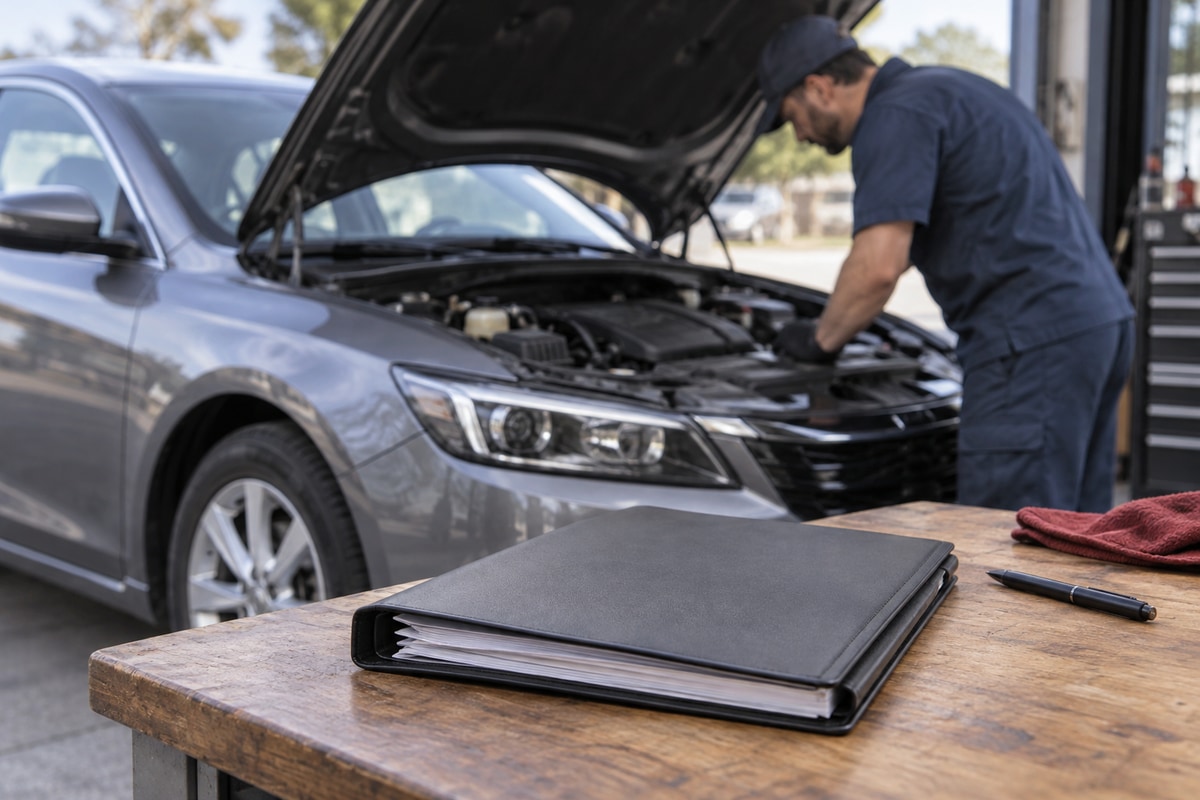
A recorded event and a current finding answer different questions
Imagine a history report recording earlier work but providing no current mechanical assessment. During a later inspection, the shop identifies an item needing further evaluation. Neither record cancels the other: the report describes recorded history, and the finding describes the inspection performed. Ask the shop what the historical event means for the inspection scope rather than inferring a diagnosis from the report alone.
Put the report date, VIN, inspection scope and unanswered question together. An empty report entry is not a guarantee that no event occurred, and a short inspection is not a guarantee that every system was assessed. Decide which missing information needs a document and which needs professional evaluation. The visit worksheet keeps both tasks visible.
Give the shop relevant records
Share vehicle-specific records with the independent inspector and explain discrepancies you want examined. Ask what can be checked and what remains uncertain.
A report and a physical finding may be consistent but address different dates. For example, a recorded service does not show whether a component needs attention today; the inspection can identify a new expense.
List history entry, supporting document and present-condition finding separately. Use that list to request an estimate or clarification before purchase.
Keep records dated and avoid substituting one check for another. The final decision also needs written purchase terms and applicable title information; neither a history subscription nor a shop visit completes the entire transaction.
When the records and the inspection do not line up
Suppose a report records an earlier event but the seller provides no repair invoice. You do not yet know the repair scope or current condition. Ask for available documents and an independent assessment of the relevant area. Conversely, if an inspection finds a concern not listed in the report, investigate that finding; the absence of a database entry does not overrule what the professional observed.
At a glance: what to check
| Decision point | Practical check |
|---|---|
| Match the report to the unit | Compare VIN and vehicle details with the car and documents. |
| Turn reported events into questions | Read entries as a starting point for documented clarification. |
| Give the shop relevant records | Share vehicle-specific records with the independent inspector and explain discrepancies you want examined. |
| Close the remaining questions | List history entry, supporting document and present-condition finding separately. |
Summary of the checks explained in this article. Keep the document, quote or professional finding beside each item; an estimate is not a completed check.
Questions to resolve before the next step
Does every history report include the same information?
Check the provider's coverage and limitations. Do not assume one report is a complete collection of all service, damage or ownership details.
Can I judge condition from title status alone?
Title information is one part of the decision. Keep current inspection, records and written sale terms alongside it.
For the relevant official guidance, consult DOJ: understanding an NMVTIS report and FTC: buying a used car from a dealer. Use each resource for its stated scope; the actual vehicle documents, written quote and applicable jurisdiction still determine the details of your case.